
About 80 percent of homes have basic wood or asphalt shingle roofs, primarily for cost purposes.[1] These roofs are cheap to install, especially if a builder constructs multiple houses simultaneously. Furthermore, wood/asphalt roofs keep purchase costs low, making the house more attractive to potential buyers. However, these types of roofing in Phoenix, AZ, and beyond could cause issues down the line.
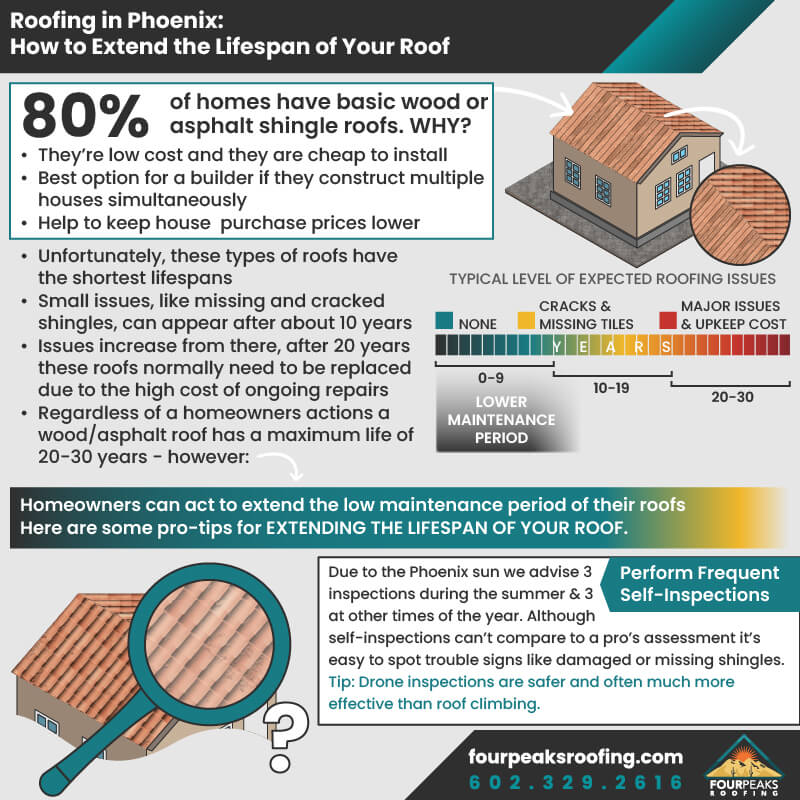
These roofs also have the shortest lifespan of all possible roof constructions. Relatively small issues, like missing or cracked shingles, often begin to appear after about ten years. After about twenty years, these roofs usually need complete replacement because these repair costs mount.
Usually, no matter what a homeowner does or doesn’t do, a wood/asphalt roof has a maximum twenty- or thirty-year lifespan. However, homeowners can take some steps to extend the low-maintenance period. At Four Peaks Roofing, we work with homeowners to extend the low-maintenance window and avoid the need for premature and inordinately expensive emergency roof replacement as part of standard roofing maintenance in Phoenix, AZ.
Pro-Tips on Roofing in Phoenix: Extending the Lifespan of Your Roof
As part of proper roofing maintenance, you are responsible for proactively maintaining the quality and lifespan of your roof. But you’re not alone. Here are some tips to extend the lifespan of your roof.
Perform Frequent Self-Inspections
The harsh sunlight of a Phoenix summer is tough on a roof. Therefore, we usually recommend three self-inspections during the summer and three scattered throughout the rest of the year. Self-inspections cannot possibly substitute for professional inspections. However, homeowners can easily spot clear trouble signs like cracked or missing shingles. Drone inspections are often much more effective and safer than roof climbing.
Clean Gutters Regularly
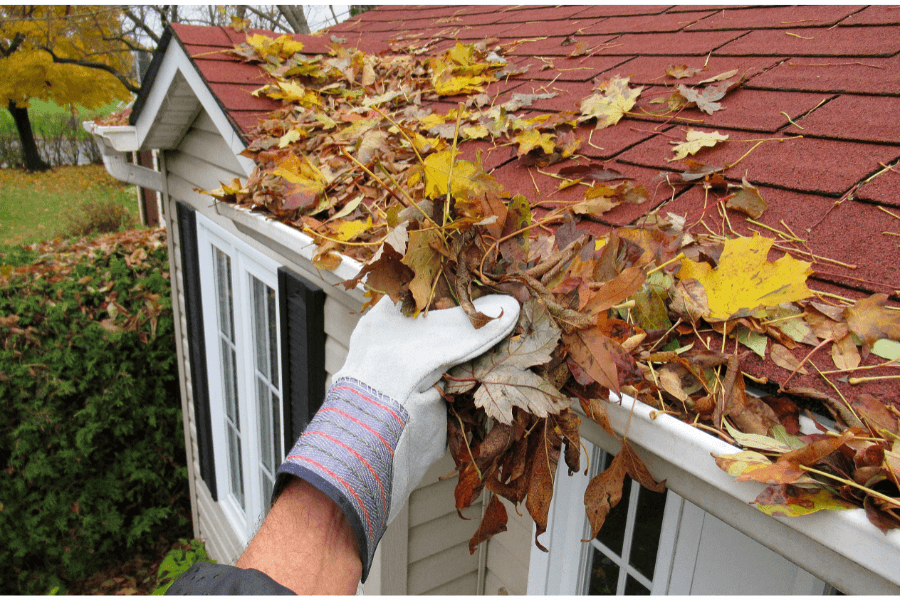
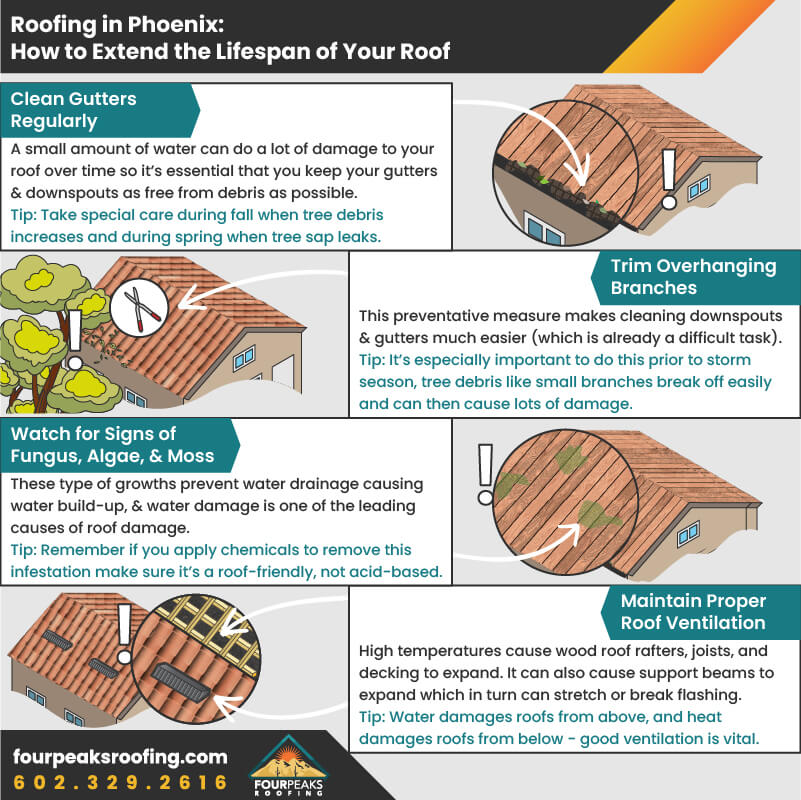
A river not much larger than a creek carved the Grand Canyon over time. Likewise, a few drops of water can severely damage your roof over time. Clogged gutters could also damage the home’s foundation.
Ensure your gutters and downspouts are always as close to debris-free as possible. Pay special attention to these areas during the fall, when debris accumulates, and spring, when tree sap leaks.
Trim Overhanging Branches
This preventative maintenance activity makes cleaning downspouts and gutters much easier, which is an admittedly nasty job. This step is crucial as the storm season approaches. Overhanging branches, especially thin ones, easily snap off and cause significant damage.
Watch for Signs of Fungus, Algae, and Moss
This step might be the most important one. It’s also a step many homeowners overlook. These growths prevent natural water drainage. Water buildup is one of the leading causes of roof damage. If you apply a chemical to remove the growth, be sure it’s a roof-friendly substance and not an acid-based substance.
Maintain Proper Roof Ventilation
Water damages roofs from above, and heat damages roofs from below. High temperatures cause wood roof rafters, roofing joists, and roof decking to expand. Furthermore, excessive heat causes support beams to expand, which causes roof flashing sealant to stretch and break. Well-ventilated attics prevent these issues.
Maintain Insulation
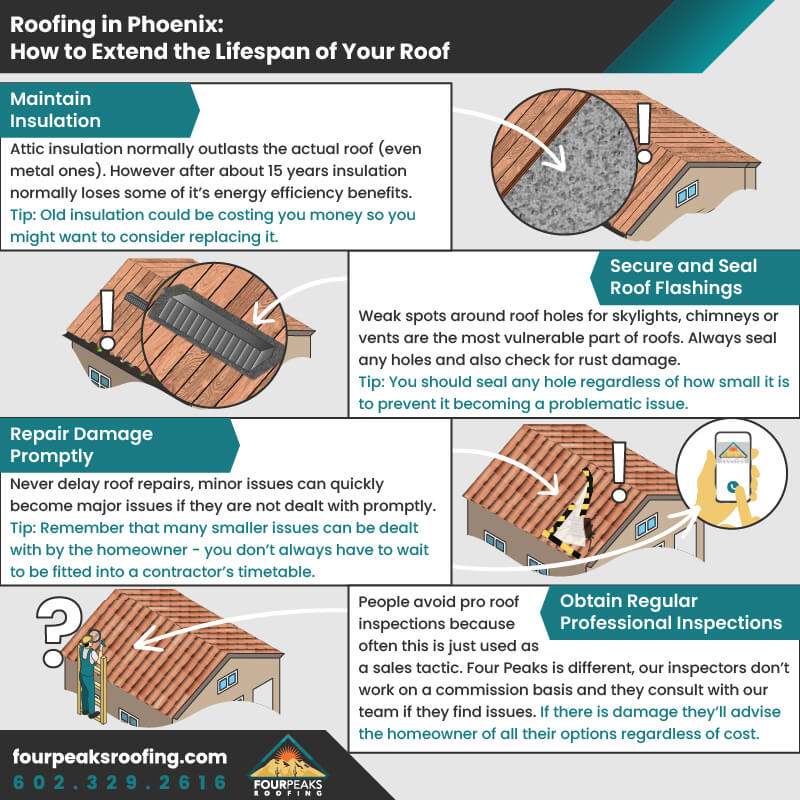
Attic insulation usually outlasts roofs, even metal roofs. However, after fifteen years, insulation often loses some energy efficiency benefits. If your insulation is at least that old, consider replacing or reinforcing it.
Secure and Seal Roof Flashings
Weak spots around a vent, skylight, or chimney might be the most vulnerable part of a roof. Promptly seal any gap, no matter how tiny, and check for rust damage.
Repair Damage Promptly
Never delay roof repairs. Minor issues quickly become big and expensive problems. Furthermore, homeowners can make minor repairs on their own time instead of calling a professional and working with the contractor’s timetable.
Obtain Regular Professional Inspections
Many people don’t obtain professional inspections because, in many cases, roof inspectors are basically salespeople. When they inspect roofs, they nearly always find problems, which nearly always require expensive correction.
Four Peaks Roofing is different. Our professional inspectors don’t work on a commission basis. So, they’re under no pressure to sell you something. Moreover, before they make recommendations, our inspectors often consult with other professionals on our team.
Additionally, if our inspectors find problems, they inform homeowners of all their options, from the least expensive to the most expensive fix, and carefully explain the pros and cons of each approach.
How many professional inspections does your roof need every year? The number usually depends on the roof’s age.
Annual inspections should suffice if you have a wood/asphalt shingle roof less than ten years old and squarely within the low-maintenance period. Professional inspections will increase as this roof gets closer to the twenty-year mark. If you maintain your roof yourself, as outlined above, you should never need more than two, or perhaps three, annual professional inspections.
Contact us to learn more about roof maintenance, upgrade, repair, and replacement.
Source:

