
The average daytime high temperature in Phoenix during the summer of 2023 was 114 degrees.[1] Granted, we had a heat wave that summer. The typical average summer daytime high is a mere 107 degrees. Prolonged exposure to such temperatures adversely affects anyone or anything, including your roof. Furthermore, no shade protects your roof, at least in most cases. It bears the full brunt of the sun from dawn to dusk.
The sustained high heat in Phoenix may be a blessing in disguise, at least to some extent. Sporadic heat waves are tough on everyone and everything. But people and roofs can better adjust to sustained high heat. The environment in Phoenix, along with an assist from Four Peaks Roofing, usually enables roofs to emerge unscathed from even heat-wave summer, which, we hope, doesn’t come around again very soon.
Regular Inspections With the Best Roofer in Phoenix
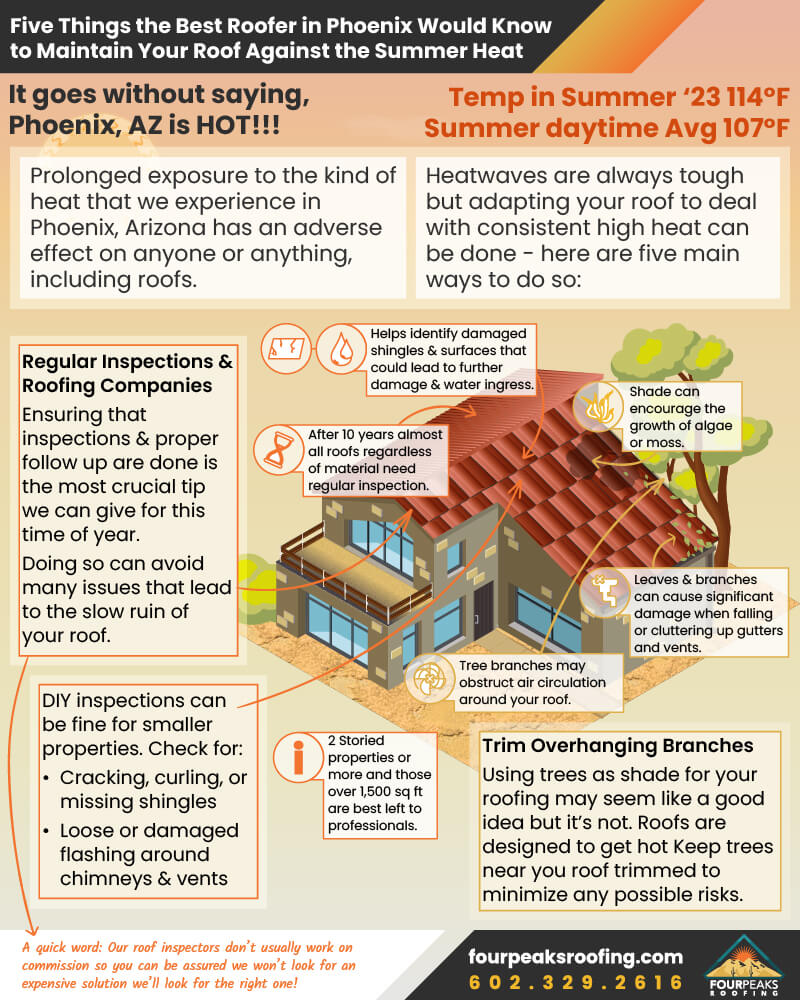
We start with the most essential summertime roof maintenance tip from the best roofer in Phoenix. If you ignore the rest of this post, and we hope you don’t, regular inspections and proper follow-up could preserve your roof.
A quick word about follow-up: some roofing contractors view routine inspections as sales opportunities. Usually, our inspectors don’t work on commission. So, they don’t recommend the most expensive solution. They recommend the right solution.
Performing regular roof inspections is crucial, especially during the summer months. The heat and prolonged sun exposure causes shingles to deteriorate. That slow destruction leads to leaks and further damage. Staying on top of inspecting your roof if it is over ten years old is essential. Most roofs, even long-lasting metal roofs, start showing some signs of wear and tear at this age.
A DIY inspection might suffice if you have a one-story house under 1,500 square feet. Inspect your roof for any signs of cracking, curling, or missing shingles. Look for loose or damaged flashing around chimneys, vents, and skylights. If you notice any issues, call a professional to confirm the possible damage, then address these issues promptly to prevent further damage.
Larger houses are riskier to inspect. Let a professional assume that risk. Summertime inspections involve a comfort factor as well. Most roofs absorb heat to keep it out of the attic. Many roofs reflect heat. Either inspection is like examining a barbecue grill while it’s running.
Trim Overhanging Branches
We mentioned the lack of shade above. Do not try to remedy that problem by allowing trees to grow. Overhanging branches pose a significant risk to your roof during summer storms or strong winds. Falling branches can cause severe damage to shingles, gutters, and other roofing components. Trim any branches that are near the roof to minimize the risk.
Additionally, in many respects, shade is the enemy. Remember, your roof was designed to get hot. Trimmed branches allow for better air circulation and reduce the amount of shade on your roof, which can help prevent the growth of algae or moss.
How The Best Roofer in Phoenix Ensures Proper Ventilation
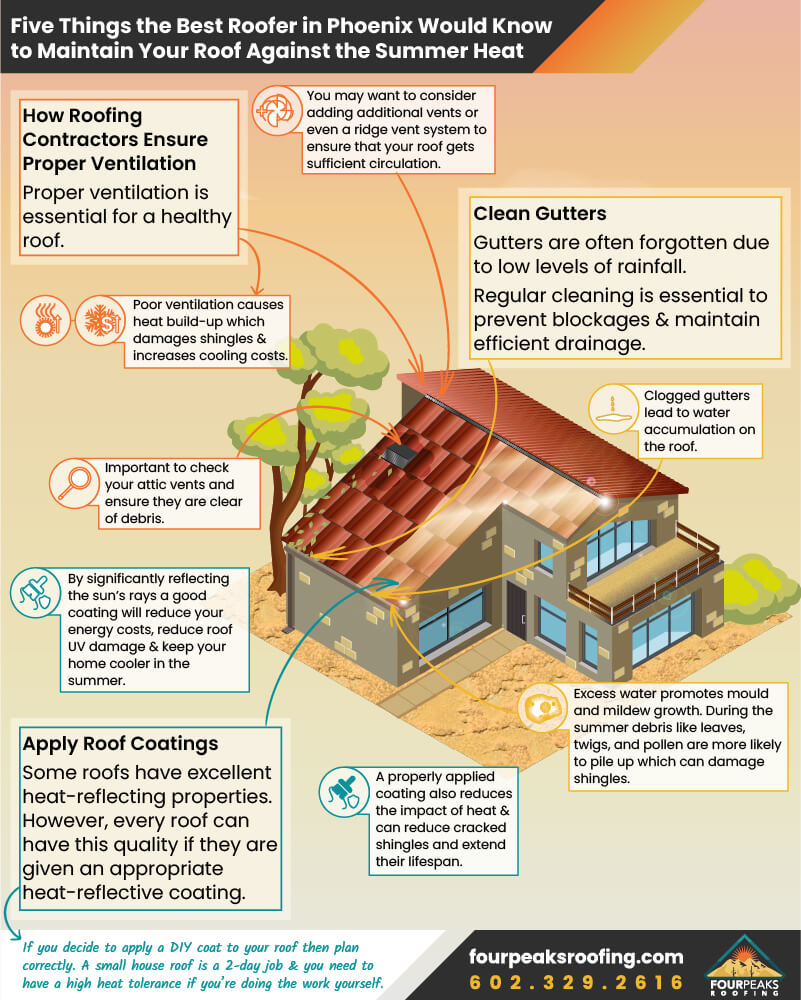
Proper ventilation is vital for maintaining a healthy and long-lasting roof. Inadequate ventilation is a double whammy. It leads to heat buildup in the attic, which causes shingles to deteriorate and increases cooling costs.
Check your attic vents to ensure they are clear of debris and functioning correctly. You may need to install additional vents or a ridge vent system to improve airflow and reduce heat buildup, especially if you converted a garage into a living space. Good ventilation not only prolongs the life of your roof. It also helps to keep your home cooler during those hot summer months.
Clean Gutters
Many overlook this item because it hardly ever rains in the summer. Clogged gutters lead to water accumulation on the roof, damaging the shingles and promoting mold and mildew growth. During the summer months, debris such as leaves, twigs, and pollen are much more likely to accumulate and obstruct proper water flow from your roof.
Regularly cleaning out the gutters is essential to prevent blockages and ensure efficient drainage. Many homeowners install gutter guards to minimize debris accumulation and reduce maintenance efforts.
Apply Roof Coatings
We mentioned that some roofs reflect heat. Any roofing material can be a heat-reflecting roof if it’s coated. Roof coatings provide an additional layer of protection against the sun’s UV rays, reducing the impact of heat on your roof. They can help to prevent cracks and prolong the lifespan of your shingles.
Consider applying a reflective roof coating, which can reflect a significant portion of the sun’s heat, keeping your roof cooler. This can also help reduce energy consumption and keep your home more comfortable in the summer.
Even if you have a small house, coating the roof is usually an all-weekend project. Think about the amount of time you have and your tolerance for extreme heat before you apply a DIY coating.
Contact us, the best roofer in Phoenix, to learn more about roofing longevity tips.
Sources:
[1] https://www.kjzz.org/2023-08-02/content-1853724-heres-how-hot-it-was-phoenix-every-day-july

