
Over 98 percent of home purchase inspection reports give the property a clean bill of health. Most inspectors only fail properties in extreme situations, so they don’t spoil real estate deals. So, over 85 percent of properties are sold with leaking or otherwise damaged roofs.[1] Over time, these small items become major and costly headaches. This is why a regular roof inspection and consistent maintenance are essential.
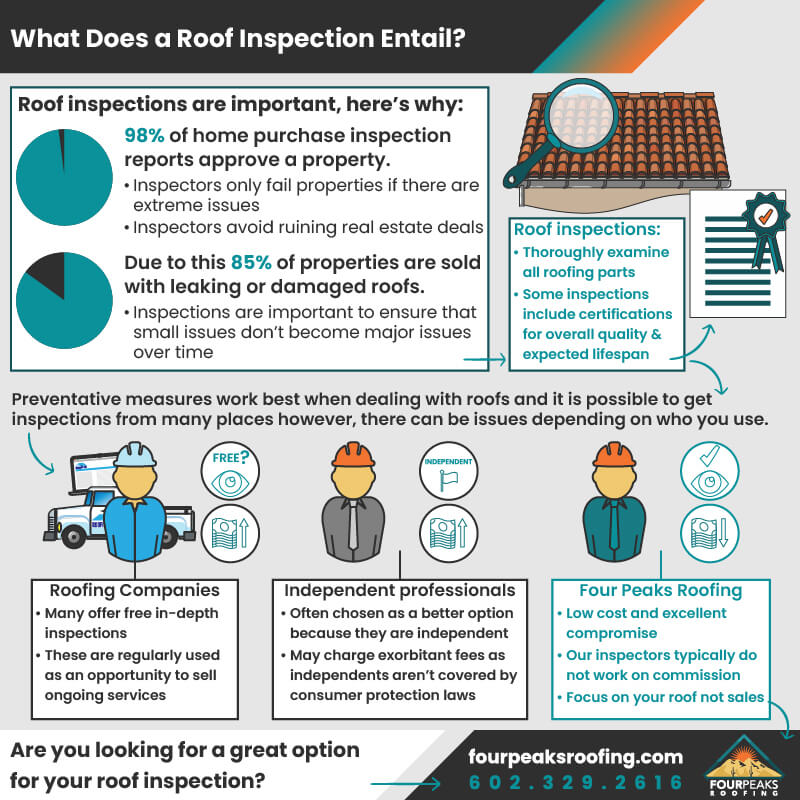
Most of us know preventative maintenance is the best way to contain such potential hazards. But most people don’t want to spend a day with a roof inspector who, in many cases, is essentially a salesman.
At Four Peaks Roofing, we’re different. Our thorough inspectors never rubber-stamp properties for whatever reason. Our professional roof inspectors also work quickly so you can get back to your life. Finally, our roof inspectors typically don’t work on a commission basis. So, if they find problems, they explain all your options, regardless of the cost.
What Is a Roof Inspection?
A roof seems like a passive feature—after all, it just sits there. However, the roof is mechanical, just like plumbing or HVAC systems. Like these systems, roof systems require regular maintenance to ensure ongoing reliable services.
Generally, a roof inspection thoroughly examines all roofing components on or in your home. The inspection is performed to determine the current performance of your roof and what, if anything, needs to be done to correct any problems.
As mentioned above, sometimes a roof inspection is a certification. In addition to looking for problems, the inspector determines the roof’s overall quality and expected lifespan.
Do Roofing Companies Do Roof Inspections?
Many roofing companies offer free comprehensive inspections. Don’t be fooled. Nothing is free. A free inspection from many roofing companies is like a free consultation with a lawyer. The inspection or consultation sets up a paying relationship.
For this reason, many people partner with independent professionals for periodic appraisals or inspections. Many independent home inspectors, who often only look for glaring problems, charge outrageous fees since many consumer protection laws don’t apply to independent inspectors.
A low-cost Four Peaks Roofing inspection is an excellent compromise. Our inspectors are thorough yet don’t charge homeowners an arm and a leg.
What Does a Roof Inspector Look for?
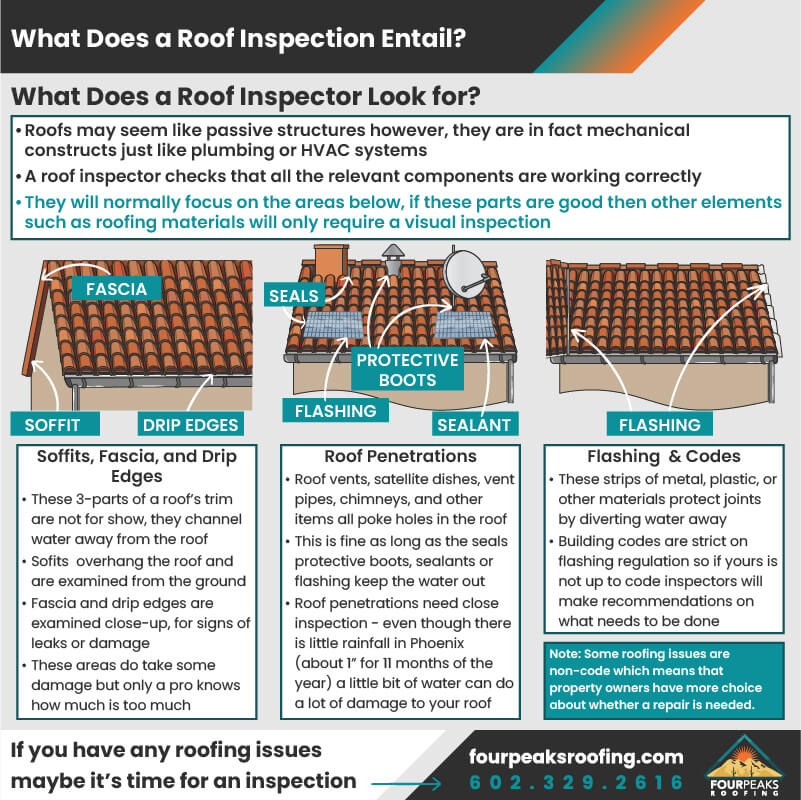
Roof inspectors must assess the performance of all roof components. They must also determine if all these components are working together correctly. Usually, our roof inspectors focus on the following areas. If these parts of the roof are in ship shape, the remaining parts, like the roofing material, only need a visual inspection.
Soffits, Fascia, and Drip Edges
These three parts of a roof’s trim don’t just make it look pretty. They channel water away from the rest of the roof.
Usually, roof inspectors examine the soffits, which overhangs over the roof, from the ground. Then, they look for signs of water leaks or damage near the fascia and drip edges.
This process is very delicate. Some water damage is inevitable and, in fact, necessary. This part of the roof absorbs some environmental punches, so they don’t damage other parts of the roof. Only a professional inspector knows how much damage is too much.
Roof Penetrations
Roof vents, satellite dishes, vent pipes, chimneys, and other items poke holes in the roof. These vulnerabilities aren’t a problem if the protective boots, seals, sealants, or flashing keep water out.
Designed roof vulnerabilities require close inspection, although it hardly ever rains in Phoenix. We average less than an inch of rainfall for eleven months out of the year. For this reason, many inspectors don’t pay much attention to water damage trouble spots. These inspectors don’t understand what a few drops of water can do to a roof.
Flashing
These strips of metal, plastic, or other material divert water away from the joint created where a wall extends through the roof. Building codes are strict regarding flashing installation. The inspector will ensure your flashing is up to code and make recommendations if not.
We should briefly discuss code and non-code roof violations. Sometimes, the law dictates what repairs must be made. Homeowners have more control over the treatment for non-code violations.
When Should I Have My Roof Inspected?
Most people go to the doctor for annual checkups, occasional certifications, such as a team sports certification, and when something hurts. Likewise, your roof should be inspected:
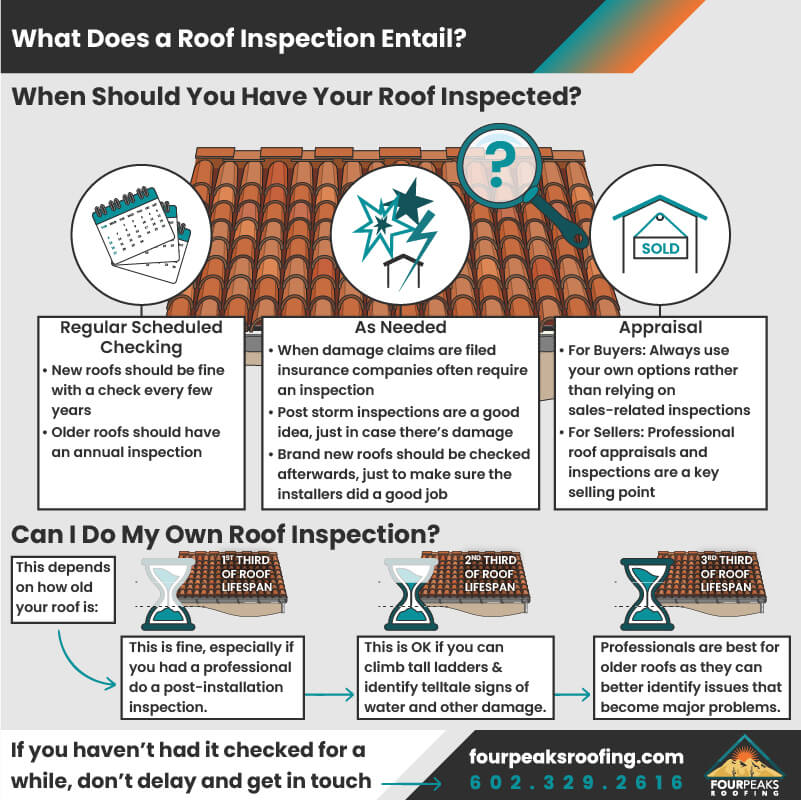
- Regularly: Newer roofs might only need inspections once every three or four years, while older roofs usually require annual inspections. Proactive roof repairs are usually inexpensive, while emergency roof repairs are much costlier.
- As Needed: When homeowners file damage claims, their insurance companies usually require inspections. A post-storm inspection is usually a good idea, whether you file a claim or not. Additionally, brand-new roofs often need inspections to ensure the installers did their jobs properly.
- Appraisal: Buyers should always know what they’re buying and not rely on sales-related home inspections. For sellers, professional roof appraisals and inspections are key selling points.
A long-term partnership with a single company expedites the process. So, when an inspector comes onto your property, the inspector doesn’t have to start from square one.
Can I Do My Own Roof Inspection?
Yes, for the first third of your roof’s predicted lifespan, especially if a professional does a post-installation inspection. A visual inspection from ground level usually suffices.
Many homeowners can also perform their roof inspections for the second third of the roof’s predicted lifespan if they can climb tall ladders and identify the telltale signs of water and other damage.
After that, professionals should perform more thorough inspections. They know what to look for and can identify possible problems before they become significant issues.
For more information about roof repair or replacement, contact us now.
Sources:

