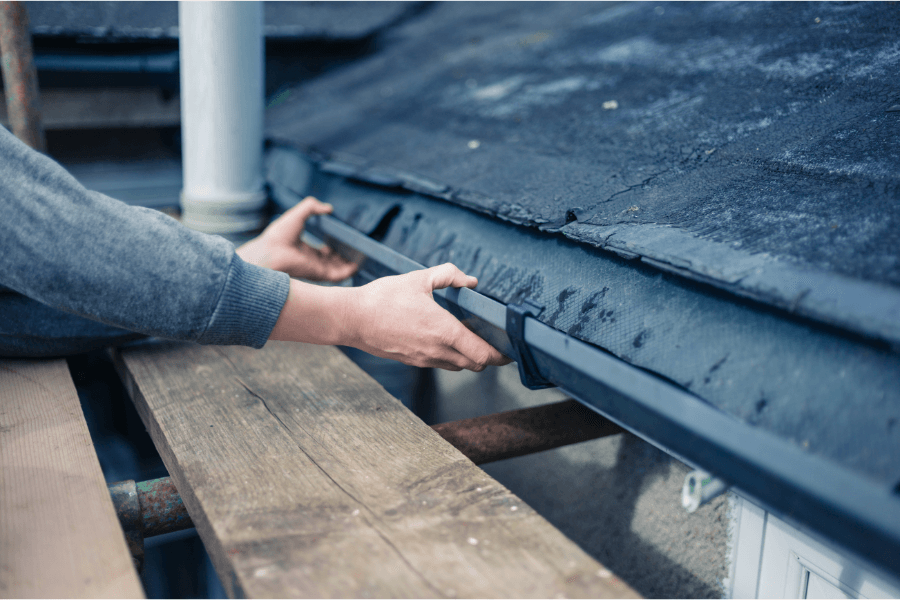
Roof repair issues usually snowball. Minor and inexpensive problems soon lead to major, more expensive problems like structural issues. As a result, the cost of repair skyrockets. Major roof repair almost always costs at least ten times more than minor repair.[1] The disruption factor also skyrockets. A professional Phoenix roofer and crew can address a minor roofing issue in hours. Major repairs are usually weeklong affairs, at the minimum.
Some roofing contractors discourage routine maintenance and frequent inspections to charge more for major repairs. For other roofing companies, an inspection is a sales call. The inspector always finds something wrong. You’ll find neither attitude at Four Peaks Roofing. Our inspectors thoroughly and regularly inspect your roof, looking for any signs of trouble. If we find a problem, we give you as much information as possible and let you decide.
A Phoenix Roofer Will Tell You Why You Should Address Minor Problems
Direct financial cost is the main reason, but not the only reason, for addressing minor problems before they become significant issues.
Many people let minor problems slide because they don’t understand the full impact of these “minor problems.” A bit of mildew, a tiny crack, or a missing shingle may seem insignificant. But these minor problems quickly cause:
- Structural Deterioration: Pests only need small openings to enter structures. A mouse can squeeze through an opening the size of a dime. Mice chew through almost anything, and their droppings carry serious airborne diseases. Plus, it’s very unsettling to hear mice run around at night.
- Compromised Energy Efficiency: This factor is a big one in Phoenix. A home’s environment must be carefully controlled to avoid sky-high cooling costs during our endless summers. Small leaks puncture this efficiency, much like a tiny pinprick punctures an entire balloon.
- Water Damage: Water leaks are much more destructive than mice or other rodents over time. These leaks affect the roof and interior of your home, including walls, ceilings, and personal belongings. Plus, a leaky roof clearly states that you’re a neglectful homeowner when people come over.
Given the relatively low cost of minor repairs, it makes sense to call our customer service department and schedule roof repair to avoid these problems.
Unfortunately, the problems are just beginning. Other longer-term and indirect issues include lower home value, insurance, and health/safety concerns.
Well-maintained roofs attract potential buyers to your home, and higher demand means a higher sales price. Many people keep driving when they see a poorly maintained roof. Furthermore, they rarely sign contracts if these documents include disclaimers about future roof repairs.
Insurance coverage for roof repair is like a car crash on a wet road. Usually, the wet road contributes to the wreck, but the driver’s excessive speed or other error substantially causes it. Likewise, many roof repair issues are a combination of neglect, which insurance usually doesn’t cover, and damage, which the policy usually covers. You don’t need a crystal ball to know how this story ends, as far as the adjuster is concerned.
Damp environments resulting from roof leaks are ideal for mold and mildew growth, which can lead to serious health issues, especially for those with allergies or respiratory problems. Structural damage, like weakened walls or a compromised roof structure, is hazardous to homeowners and their families.
Roofing Materials and Minor Repairs
The kind of material is usually the most significant factor in determining the need and cost of repairs. Homeowners should strongly consider this factor when they build new homes or replace their roofs.
Asphalt Shingles
Asphalt shingles are among the most popular roofing materials. They’re relatively affordable and durable but can blow off with strong winds. They also loosen around chimneys and skylights, which can lead to leaks.
Composite Shingles
Composite shingles comprise a mixture of fiberglass and asphalt. They typically last around thirty years, less than some other materials, but repairs are usually relatively straightforward and inexpensive.
Metal Roofs
Metal roofs come in various alloys and pure metals, but steel and aluminum are usually the most affordable. Low-maintenance metal roofs are highly durable and wind- and water-resistant, typically lasting 40 to 70 years.
Wood Shakes
Wood shakes or shingles give your home a distinctive aesthetic touch but are notoriously tricky to install and maintain. Furthermore, these shingles can last 30 to 60 years, depending on the wood species, and repairs are usually less costly. However, this roofing material is susceptible to rot, moss, and insect damage.
Tile Roofs
Tile roofs come in many styles and materials, including clay, concrete, and terracotta. Clay and concrete tiles are usually the most durable, lasting up to 50 years. Tile roofs are generally reasonably easy to maintain, but the tiles are very fragile. So, repairs are usually best left to pros who know how to navigate them without inflicting damage.
Slate Roofs
Slate roofs are among the most expensive, but they’re also the most durable and by far the longest-lasting (up to 200 years with proper maintenance). However, slate is incredibly heavy, so it’s not a fit for all homes, and in some cases, you might need additional reinforcements to support it.
Flat Roofs
Flat roofs are often made of more affordable materials than many other roofing types. These materials are generally light and easy to install, but they have the shortest lifespan, ranging from 15 to 30 years, depending on the type.
Contact a Phoenix Roofer Today
Contact us, your local Phoenix roofer, if you need roof repair. No job is too big or too small.
Sources:
[1] https://www.homeinspector.org/consumers/roofing/roof-repair-cost

