
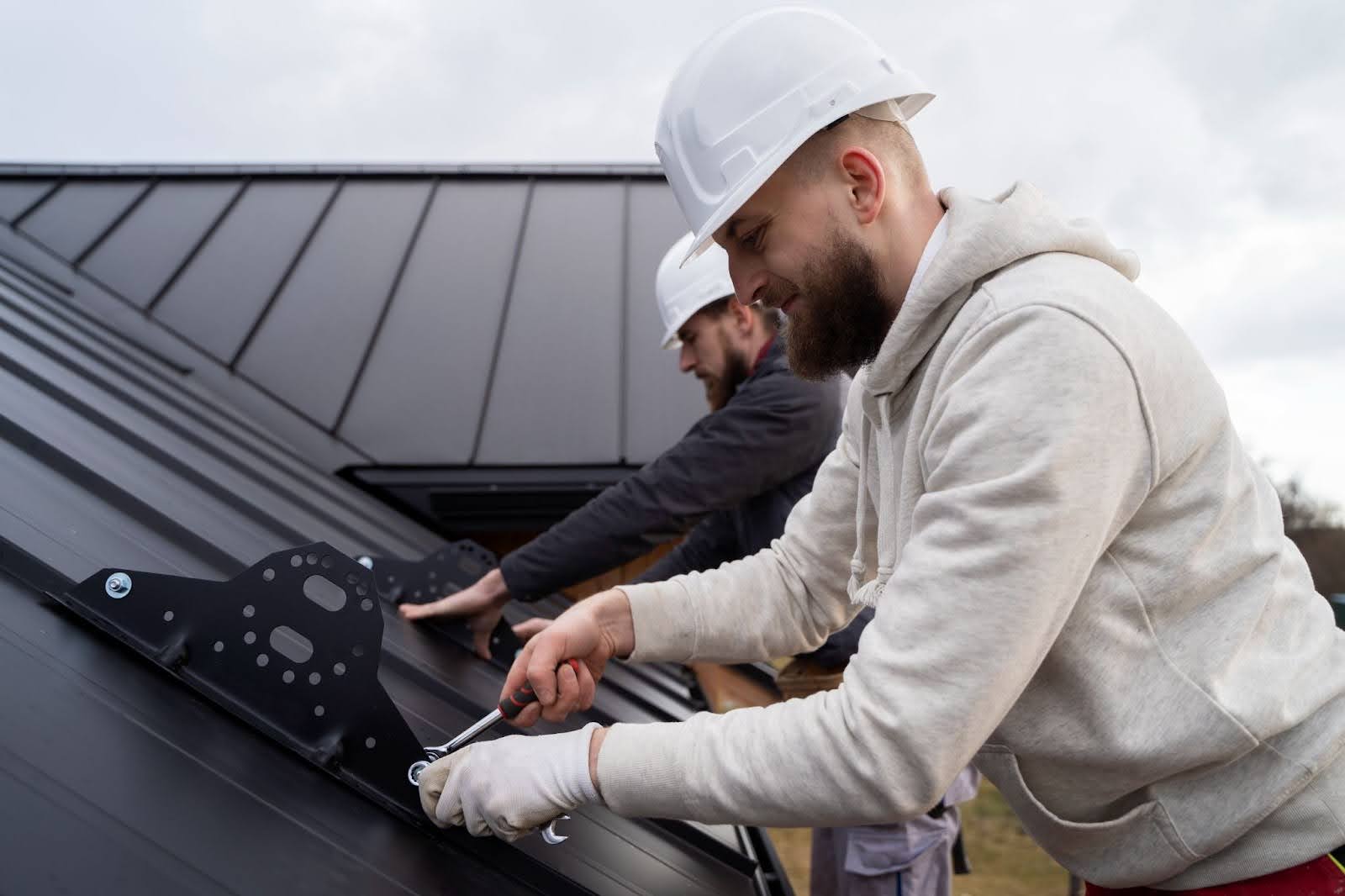
Metal Roofing vs. Tile Roofing: Which Is Best for Your Phoenix, AZ Home?
If you’re replacing a roof in Mesa, Scottsdale, Phoenix, Prescott, the decision usually comes down to two finalists: metal or tile. Both are built for Arizona’s heat, both outlast asphalt shingles by decades, and both show up constantly across East Valley neighborhoods. But they perform differently and suit different kinds of homes.
Here’s a straight, side-by-side comparison to help you decide which one makes sense for your Mesa property.
Did You Know?
- Tile doesn’t actually block heat on its own — it’s the airflow underneath the raised tile that does most of the work, which is why tile installation quality matters as much as the material itself.
- Metal roofing weighs a fraction of what tile weighs, which is why it’s often the go-to choice for additions or older structures that weren’t engineered for heavy roofing loads.
- Metal’s fire resistance never degrades with age. Tile performs well too, but its underlayment — not the tile — has a defined replacement cycle most homeowners don’t know about.
- Both materials are available in profiles designed to mimic the other’s look, so “I want the tile look but not the weight” is a legitimate, buildable request.
Head-to-Head Comparison
| Metal Roofing | Tile Roofing | |
|---|---|---|
| Lifespan | 40–70 years | Tile itself can last 40–100 years; underlayment beneath it has its own replacement cycle |
| Fire rating | Class A (non-combustible), doesn’t degrade with age | Generally strong, varies by product |
| Weight | Lightweight | Heavy — may require structural verification on older homes |
| Maintenance | Low — periodic inspection and fastener/sealant checks | Tile itself is low-maintenance; underlayment beneath it needs eventual attention |
| Best for | Modern/contemporary homes, wildfire-adjacent areas, long-term owners | Southwest/Spanish-style architecture, HOA-governed communities |
Where Metal Roofing Wins
- Weight. Metal is dramatically lighter than tile, which matters on additions, older structures, or homes where structural reinforcement would otherwise be needed.
- Solar reflectivity. Metal reflects solar radiation rather than absorbing it — a meaningful edge for a Mesa summer electric bill.
- Low maintenance. No tiles to crack or slip after monsoon winds; nothing to reset after routine maintenance work like solar panel servicing.
- Fire performance. A Class A, non-combustible surface that doesn’t lose fire resistance as it ages.
Where Tile Roofing Wins
- Architectural fit. If your Mesa home is Spanish-style, Southwest, or in an HOA community with tile-only design standards, tile is often not optional — it’s required.
- Thermal mass. Tile’s raised profile allows airflow underneath, and the material absorbs and releases heat slowly, which measurably reduces cooling costs in desert climates.
- Resale expectation. In many East Valley neighborhoods, buyers expect tile, and it can support resale value simply by matching the surrounding architecture.
What Actually Breaks Down Over Time
This is where the two materials differ most in real-world ownership:
- Metal roofing rarely needs anything beyond periodic inspection and fastener/sealant maintenance over its 40–70 year life. There’s no separate “wear layer” to plan around.
- Tile roofing has a hidden maintenance schedule most homeowners don’t know about: the underlayment beneath the tile — not the tile itself — typically needs replacement well before the tile shows any wear. Homes built between 1995 and 2008 are now reaching that window.
Neither issue is a reason to avoid tile — it’s simply a maintenance milestone worth planning for, the same way you’d plan for an HVAC system’s mid-life service.
Which One Is Right for Your Mesa Home?
Choose metal if: you want the lowest long-term maintenance burden, your home isn’t restricted to a specific architectural style, you’re in a wildfire-adjacent or high-wind area, or you want maximum energy reflectivity.
Choose tile if: your HOA or home’s architectural style calls for it, you value the thermal mass benefits for cooling costs, and you’re comfortable planning for an underlayment refresh down the road.
Frequently Asked Questions
Which lasts longer in Arizona, metal or tile roofing? Both can last 40+ years. Metal roofing typically runs 40–70 years with minimal maintenance. Tile itself can last 40–100+ years, but the underlayment beneath it usually needs replacement well before the tile shows wear.
Is metal or tile roofing better for lowering energy bills in Mesa? Both perform well. Metal reflects solar radiation directly; tile uses thermal mass and airflow underneath the tile to slow heat transfer. Either can meaningfully outperform a standard asphalt shingle roof.
Which is heavier, metal or tile? Tile, by a wide margin. That’s why some older homes or additions need a structural evaluation before tile can be installed, while metal rarely raises that concern.
Can I install a metal roof if my HOA requires tile-style roofing? Some HOAs allow metal roofing manufactured to mimic a tile profile. Check your HOA’s architectural guidelines before choosing — this is worth confirming before, not after, ordering materials.
Get a Side-by-Side Assessment for Your Mesa Home
Four Peaks Roofing installs and repairs both metal and tile roofing systems across the East Valley. We’ll walk your roof, talk through your architectural requirements, and give you a straightforward comparison — no pressure either direction.
Call 602.610.2990 or request a free estimate today.

