
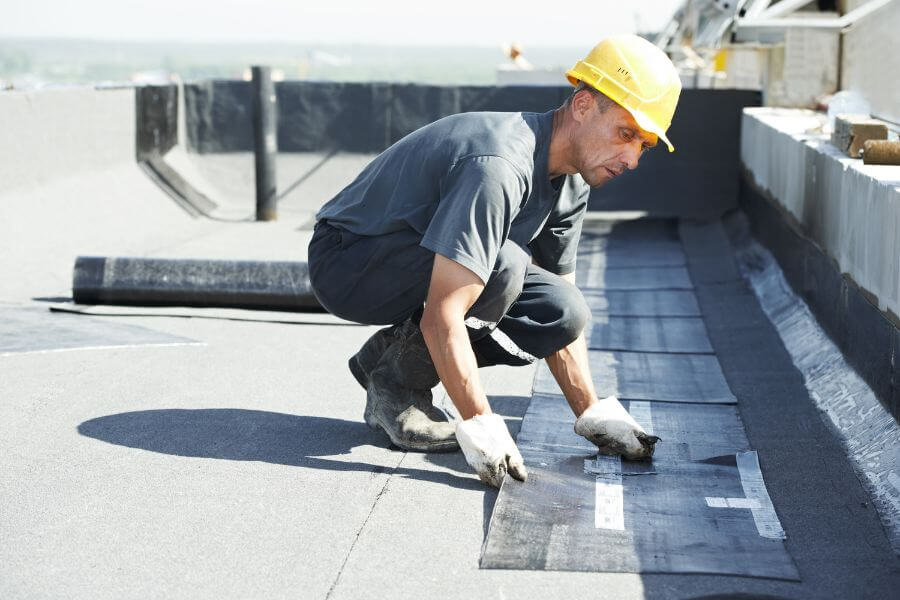
Roof coating, like the roof itself, is designed to wear out. This process occurs quickly in the Phoenix area. Because of the hot sun and intense UV rays, and also because of occasional heavy rains, a flat roof should be recoated every five to seven years.[1] Admittedly, that’s a lot of maintenance. But replacing the roof is the only effective alternative to recoating the roof. So, sometimes the choice to recoat a flat roof can save you from prematurely needing a roof replacement!
As outlined below, the right materials make a big difference in the recoating process. The right people make an even bigger difference. At Four Peaks Roofing, we have the right people. Some roofing contractors have A, B, and C teams. The customers with the biggest jobs get the best crews. But at Four Peaks Roofing, we only have A crews. Everyone gets the same quality expertise and craftsmanship.
Benefits of Recoating Your Flat Roof
As mentioned, sun and water damage are the two biggest threats to the integrity of a flat roof. Recoating your flat roof addresses both issues.
Actually, sunlight is more of a cost thing. A fresh coating, especially white acrylic or silicon, reflects UV rays and keeps interior temperatures up to 20 degrees cooler. Generally, utility bills are one of a business’s largest expenses. So, a roof recoating practically pays for itself in terms of cooling costs alone.
No flat roof is perfectly flat. Some ponding is inevitable, mostly because the building’s foundation settles and the roof shifts.
Standing water on a flat roof for a day, or maybe a day-and-a-half, following a storm might be normal. However, according to the National Roofing Contractors Association, any water found ponding on flat roofs for longer than 2 full days should be examined by a professional commercial roofing contractor.[2]
Preparing the Roof
When doing recoating of a flat roof, the weather conditions matter. Low humidity, zero rain, and moderate temperatures set the stage for the best possible roof recoating. That combination doesn’t occur too often in Phoenix, so when the golden hour arrives, a roofing contractor should get to work. As a rule of thumb, recoating works best when the daytime high stays below 90 degrees.
Our team starts by thoroughly cleaning flat roofs. After the roof is swept, if recommended by the manufacturer, we’ll apply a primer and note any areas where seam repairs are needed. Then, we’ll use a thermal scanner, or a similar device, to find weak spots.
Recoating a damaged roof doesn’t extend its lifespan. That’s like putting new wine into old wineskins. Isolated water or other damage isn’t a problem. But roofs with more than 25 percent moisture damage need replacing, not recoating.
Available Materials
Many Phoenix property owners choose acrylic flat roof coating. These white coatings have excellent sunlight-reflecting ability and are easier to install. Acrylic roof coatings are less expensive than alternatives and just as durable. When your flat roof is coated with acrylic, you can expect long-lasting performance, reduced energy costs, and decreased maintenance costs.
Pitfalls to Avoid When You Recoat a Flat Roof
As mentioned, flat roof coatings don’t seal leaks. Hairline fissures are difficult to spot, especially if the installation team rushes through this part of the job. Once covered, the crack gets worse, and the damage is invisible.
Also, watch out for moisture underneath the coating. Any excess moisture could cause delamination or blistering. Furthermore, when moisture is trapped between the roof’s piles, the underlying insulation becomes wet and rigid. Additionally, the coating cannot seal correctly unless the primer is applied first.
Note that these issues usually involve preparation for recoating and not the recoating itself. When a team takes pride in its work and takes the time to do things right, flat roof recoating is often a straightforward process.
Contact Four Peaks Roofing for Flat Roof Repair, Recoating, or Replacement
Contact us to learn more ways to keep your roof stronger longer.
Sources:
[1] https://www.nytimes.com/1991/08/25/nyregion/home-clinic-preserving-a-flat-roof.html
[2] http://docserver.nrca.net/technical/8363.pdf

